The 5M Ministry Model: Supporting the 5Ms (Australia)
In this article
Introduction
Magnification
Membership
Maturity
Ministry
Mission
Introduction
Many Australian churches in the Reach Australia network and beyond use the 5M ministry model - Magnification, Membership, Maturity, Ministry & Mission to shape and structure their ministry. While the model offers a clear framework, long-term, sustainable growth depends on having the right systems in place to support each area. This article explores how ChurchSuite can support each of the 5Ms, highlighting key features and showing how to use your data to track progress across each ministry area.
Magnification
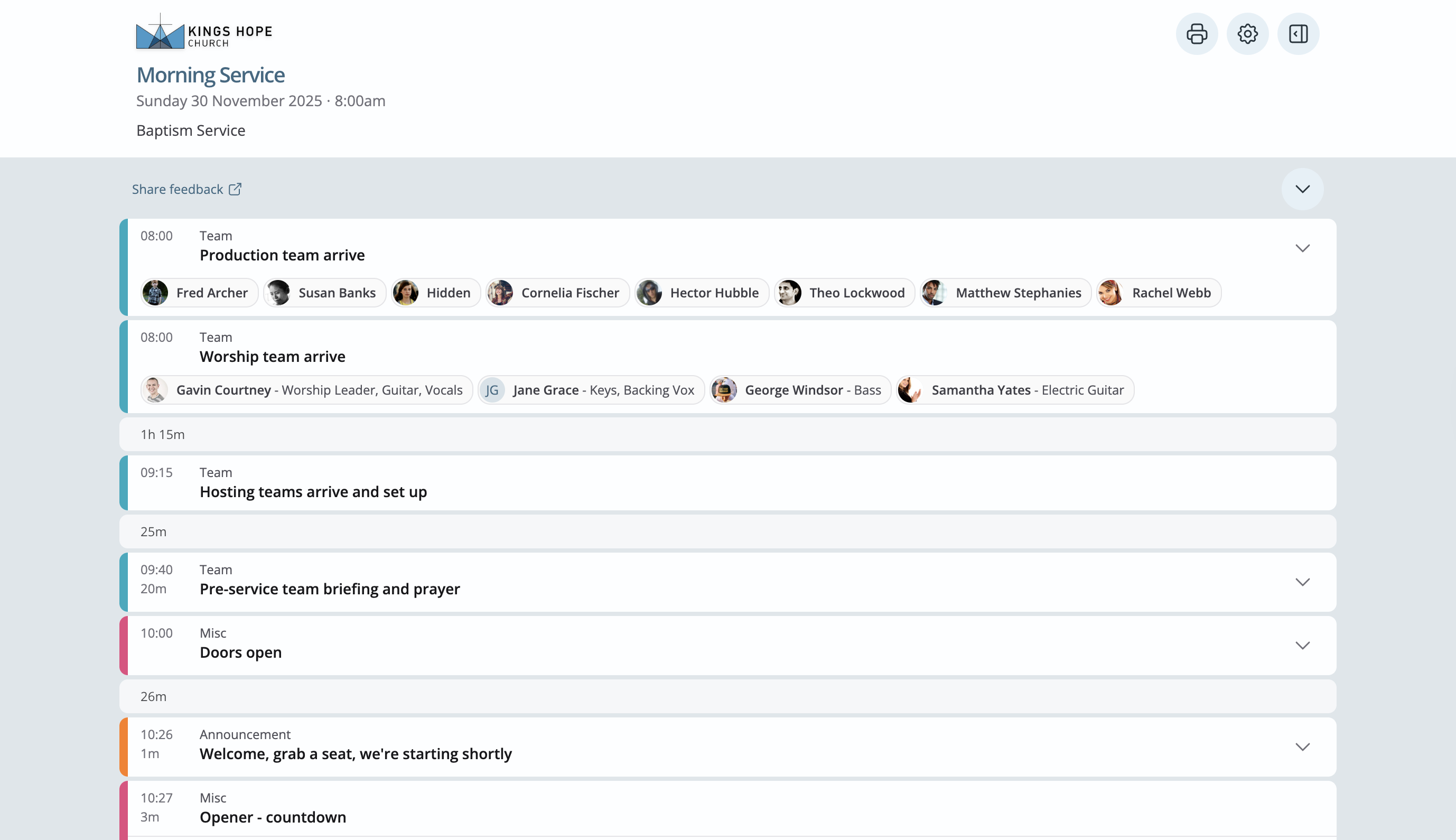
Magnification is about creating environments where people can glorify God, with a particular focus on gathered worship. Practically, this means having clear, coordinated plans for Sunday services, ensuring your serving teams have visibility and clarity on what’s happening throughout the service. The Planning module supports this by allowing you to build detailed service plans - from teaching and liturgy to music sets - so your team can serve with confidence and unity. Plans are visible in My ChurchSuite, the member-facing side of ChurchSuite, meaning that those serving on your roster teams who may not be admin-facing Users can still see what's happening at different points of the service, including any important information they might need.
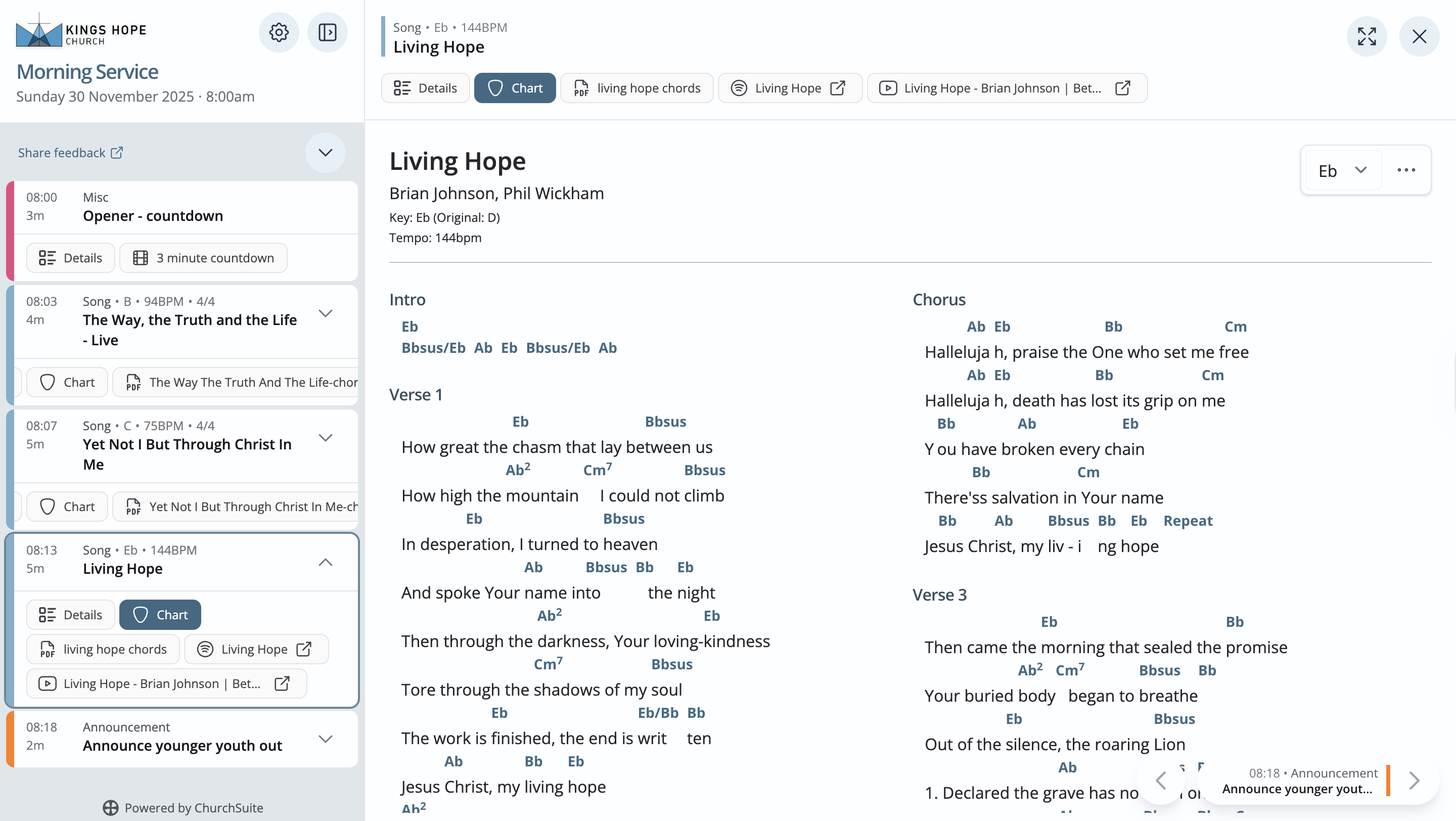
You're also able to manage your own dedicated Songs library, empowering Planning module users (especially Music leaders), to build out song sets with the associated chord charts and files, including Spotify/YouTube links. Each Song also has usage statistics, helping to decide which songs to use each week without too much repetition. During the service, your music team is also able to use the dedicated file viewer to view chord charts and transpose them in real time.
Membership
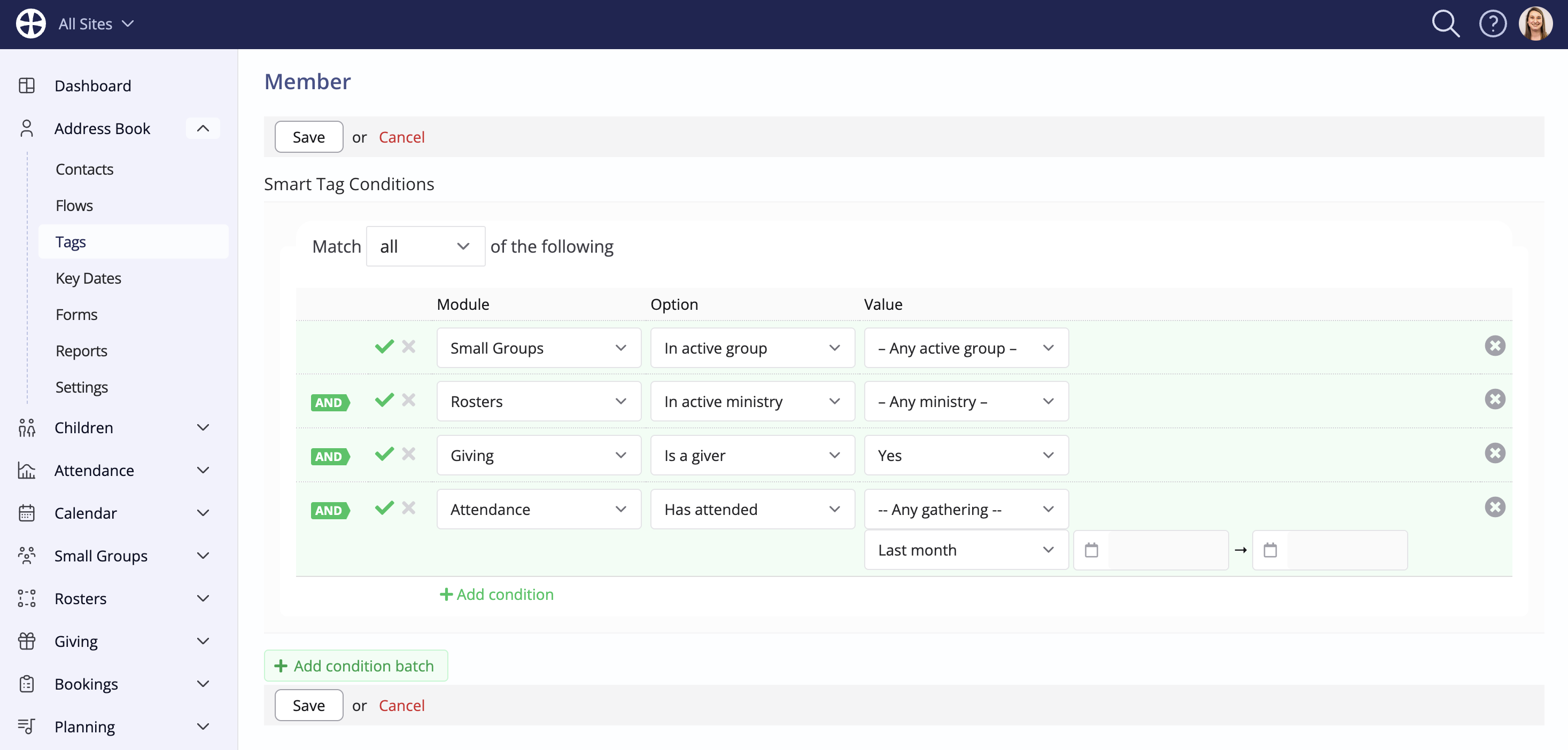
Membership is about fostering a sense of belonging, guiding people from simply attending to becoming fully engaged and committed members of the church community. In each of the 'people' modules of ChurchSuite, Smart Tags draw on the data stored across your account to help track the level of discipleship someone is at. For example, you could group together those you'd consider your core membership using something like the below, customising based on the engagement metric relevant for your church:
Your User Dashboard is a great place to keep track of different metrics of engagement across your ChurchSuite account, as well as optionally setting targets and seeing progress against them:
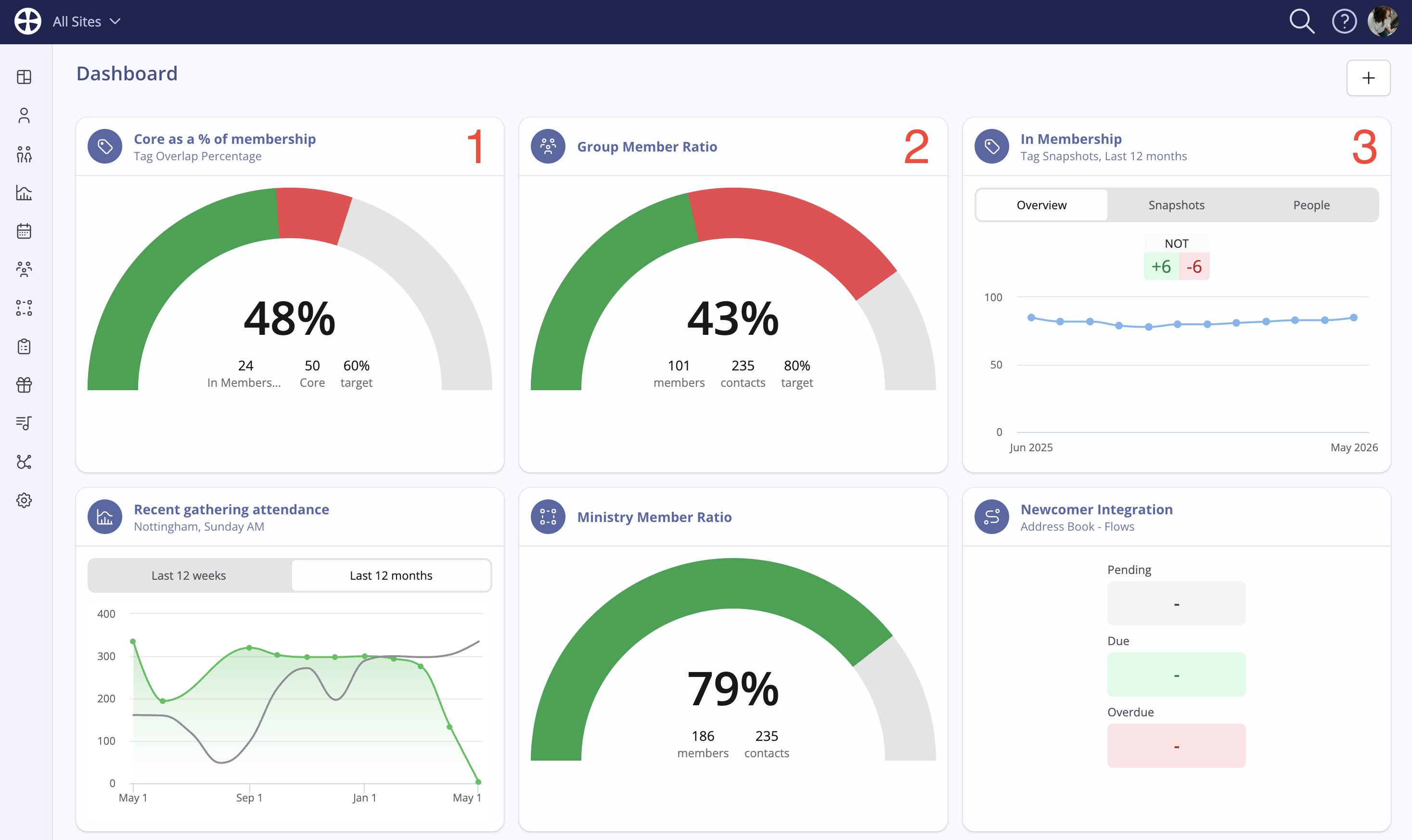
1. The Tag Overlap Percentage widget enables you to compare the overlap of two tagged groups of people. On this dashboard, we've set up a widget showing what % of my Membership tag are also in my Core tag. Other use-cases might be showing the % of members that attended church in the last three weeks, the % of members who are also in a leadership role or the % of volunteers that are also in a small group.
2. The Group/Ministry Member Ratio widget enables you to see what % of your membership is also part of a roster team or in a small group - giving an indication of the level of engagement members have.
3. The Tag Snapshot widget enables you to see how a particular tagged group has grown. In this example, the widget is showing how my Membership has grown over the last 6 months.
Maturity
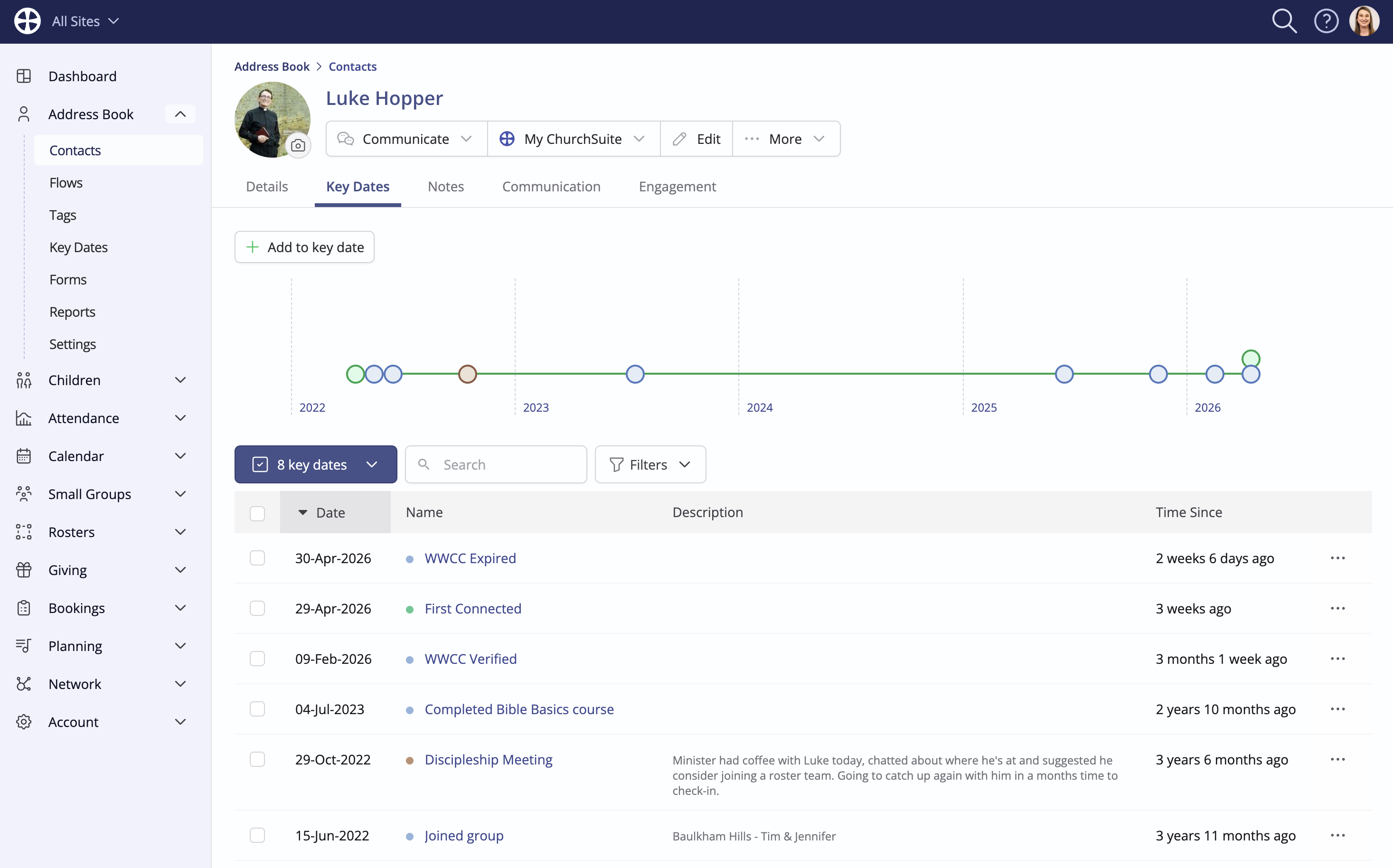
Maturity describes the spiritual growth and discipleship of those in our church. Key Dates enable you to keep track of an individual's discipleship journey with your church, seeing their story mapped out. Where multiple people might be involved in an individual's journey, this gives a helpful overview for everyone pastorally caring for them.
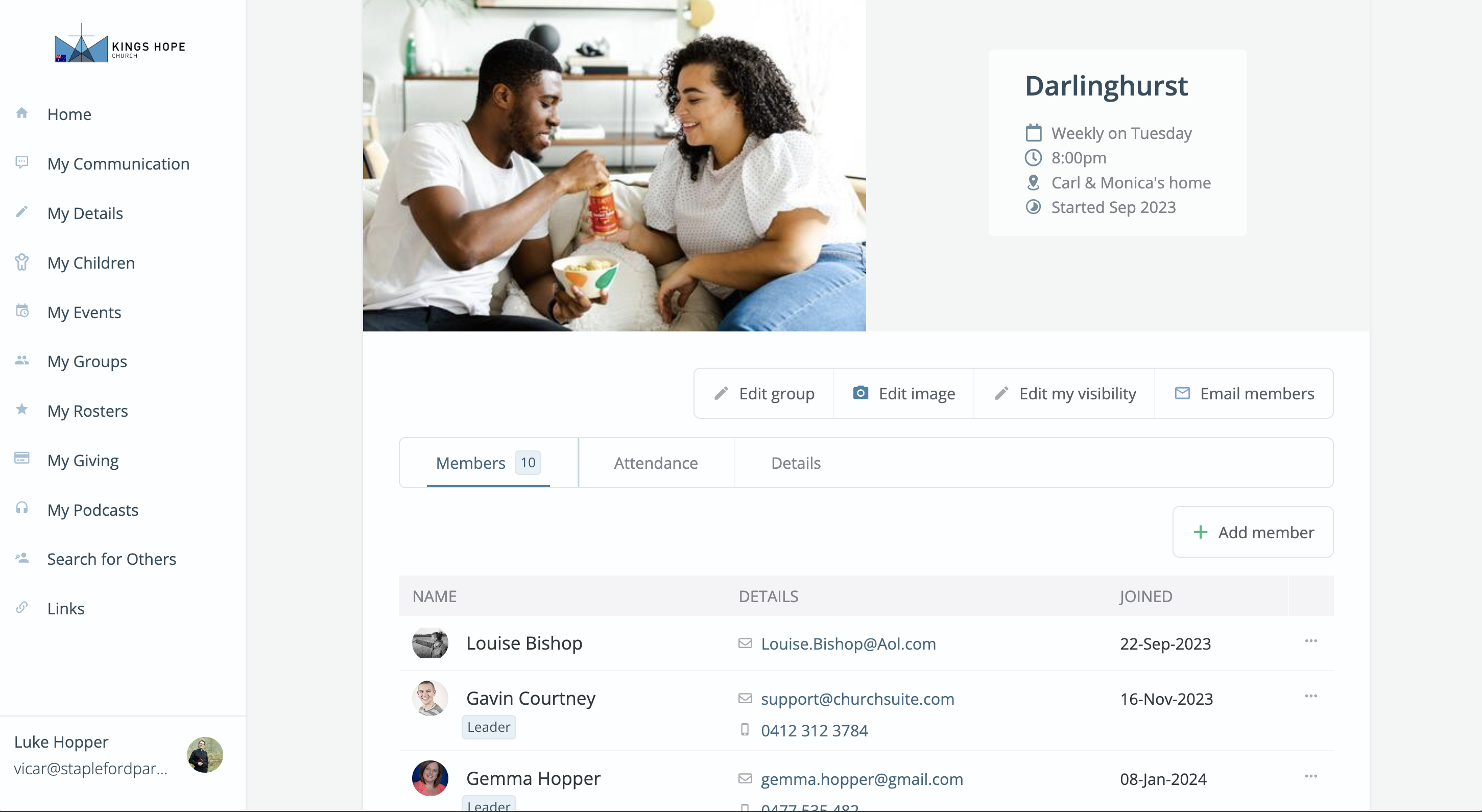
Often, that discipleship happens in smaller groups that meet outside of Sunday services (perhaps a midweek Bible Study or discipleship groups) - the Small Groups module creates an ideal place to track engagement with those groups and also to create community. Individual group leaders can take ownership of their groups, marking an attendance roll each week and communicating with their group members through My ChurchSuite. Having access to attendance data means those group leaders can check in on members that haven't attended in a while and easily disseminate study materials.
Ministry
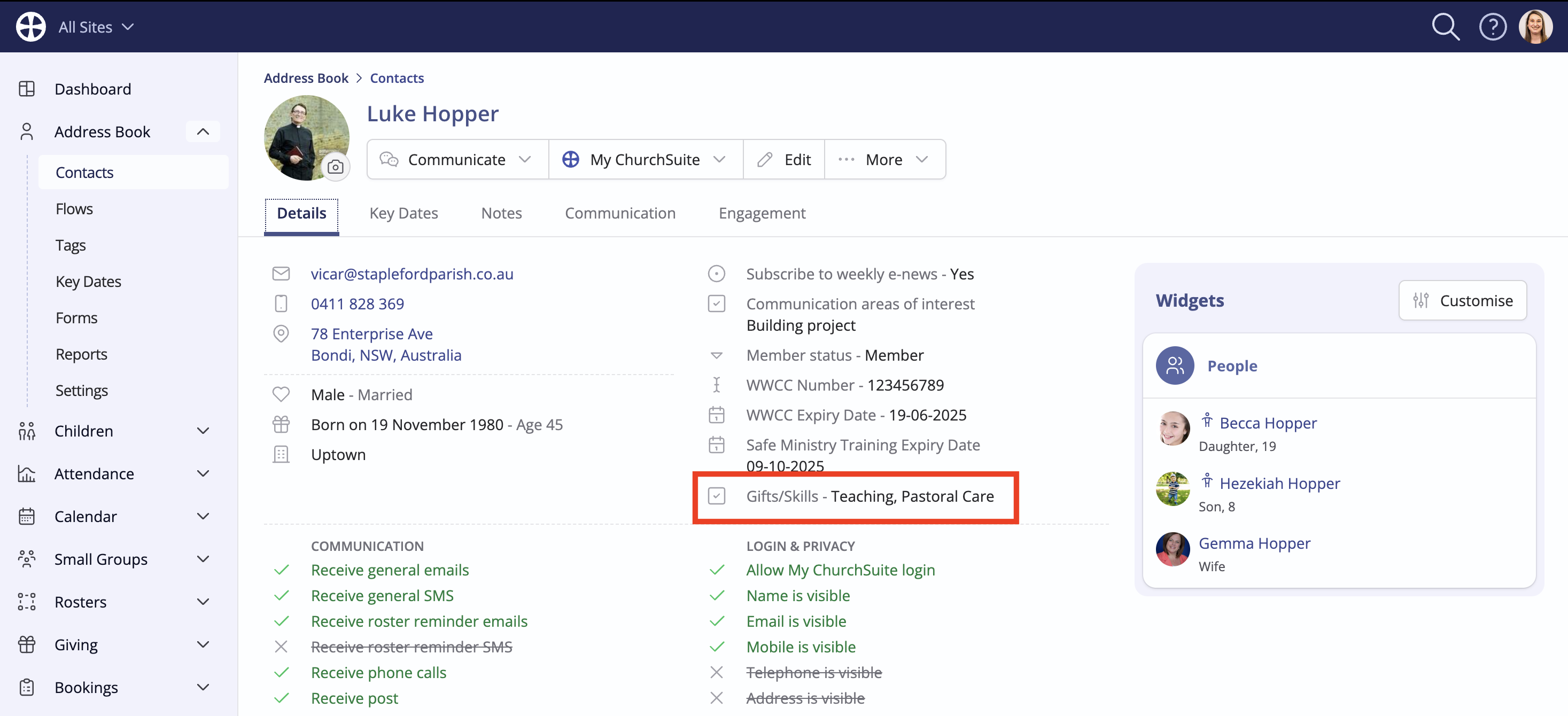
Ministry is all about using members' God-given gifts and talents in serving. For this M, use a Custom Field against the person for the gifts or talents they have, so others asking them to serve can quickly identify those with the necessary skills.
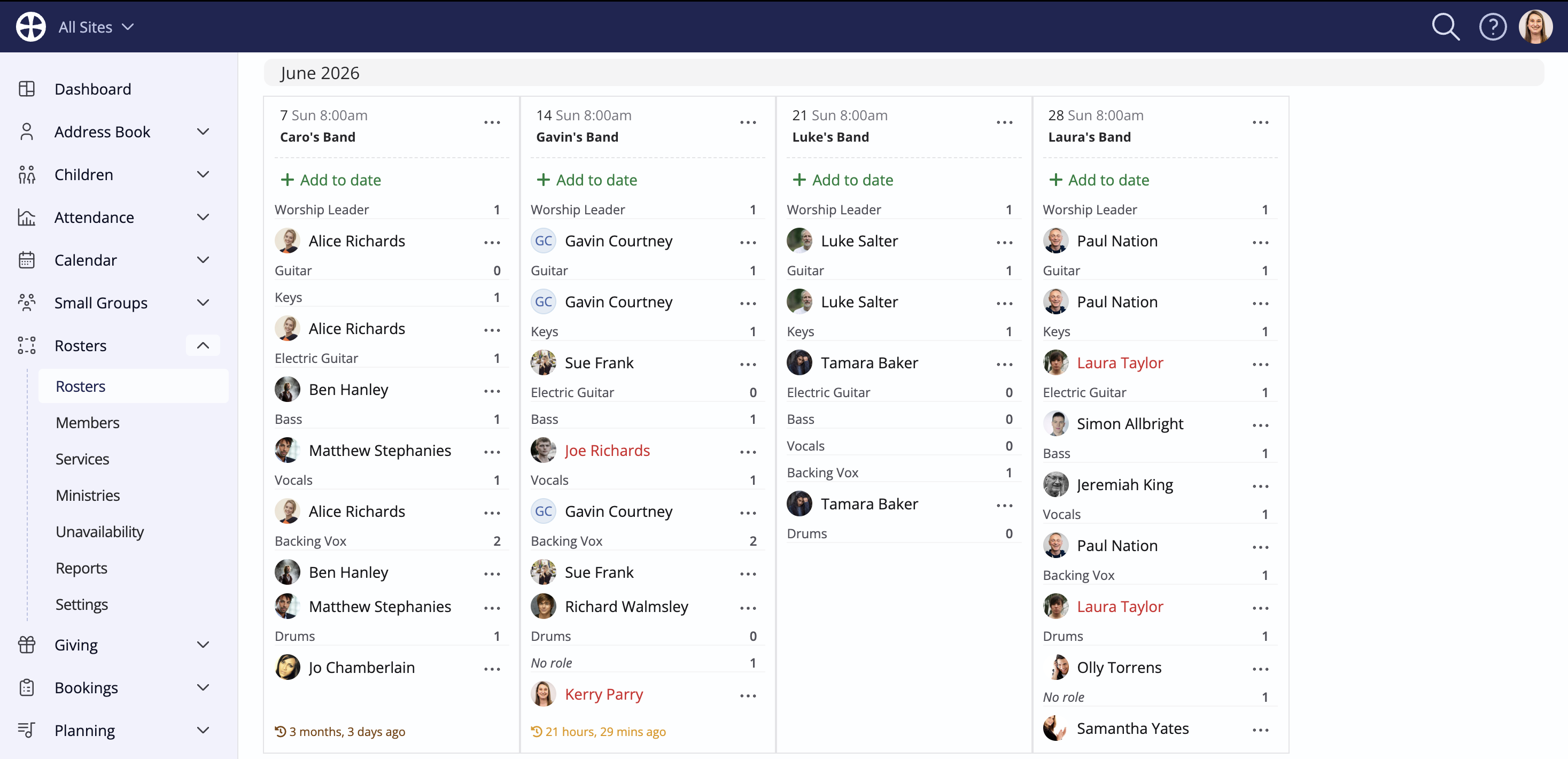
The Rosters module helps to manage your serving teams and allows you to assign people to the roles that most closely match their gifts and talents.
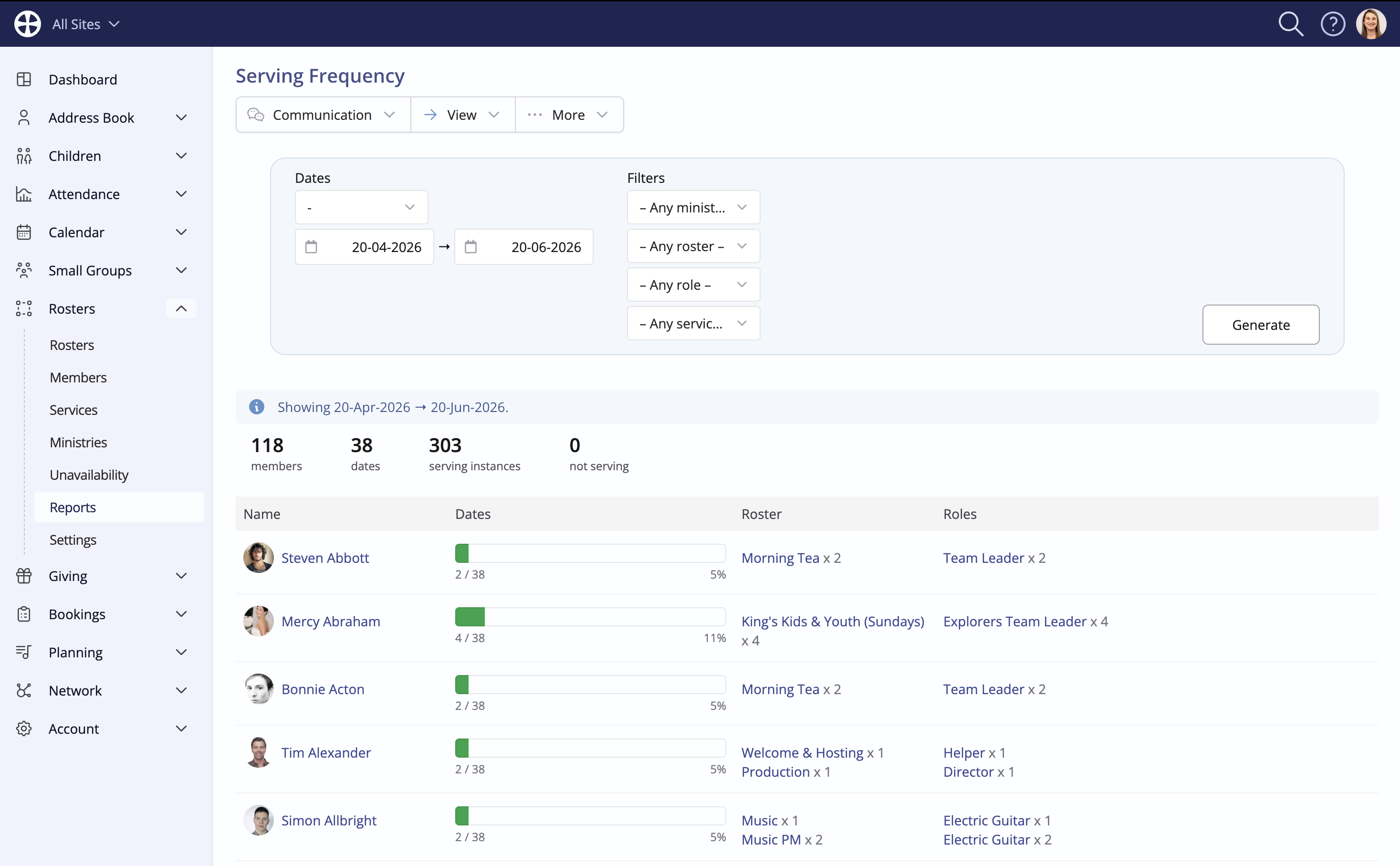
The Serving Frequency report enables you to care well for the people in your teams, allowing you to see who may be serving more and ensuring that they're not over-serving. In the example below, Mercy is the top-server and has served 11% of the available dates in a variety of roles.
Mission
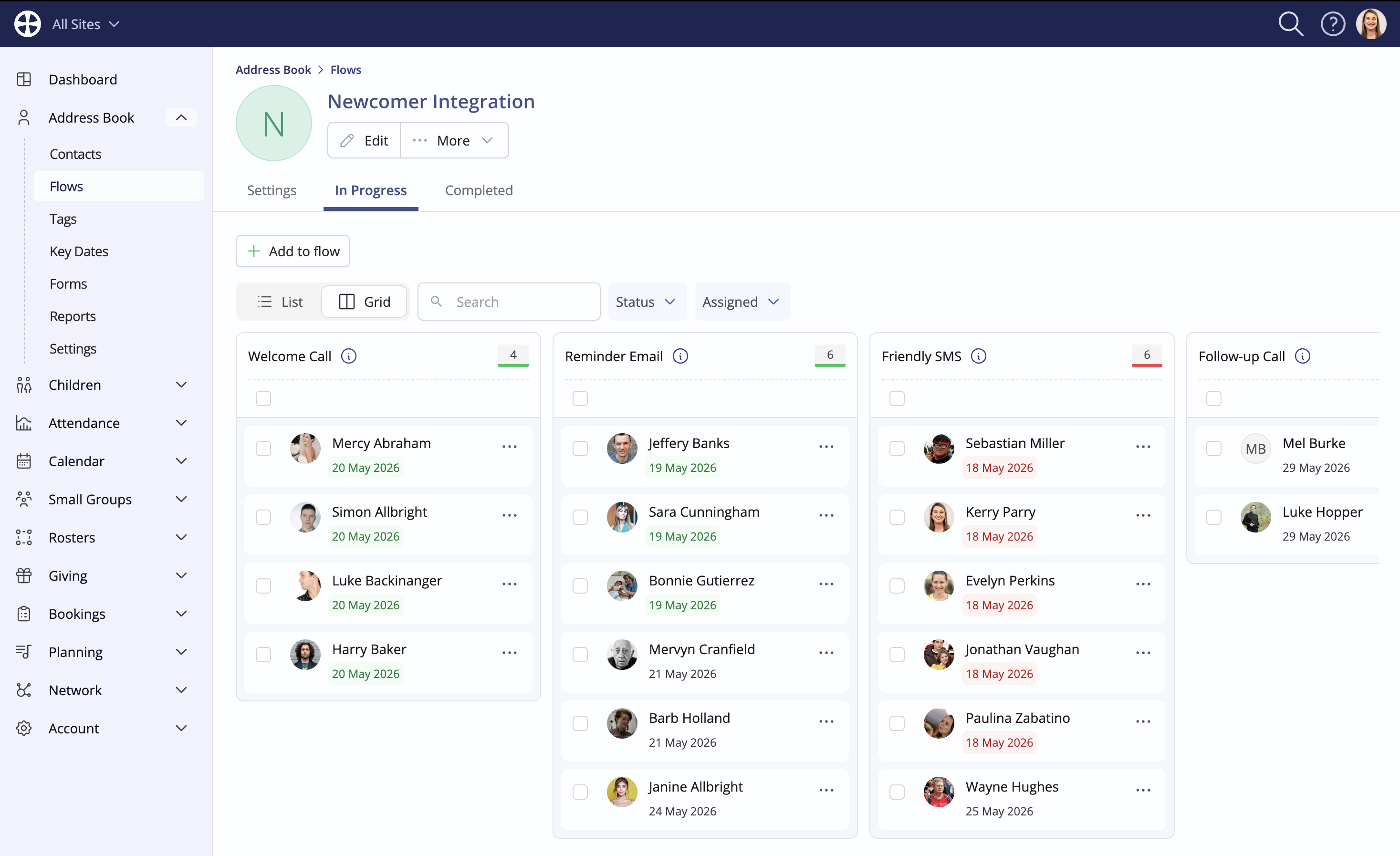
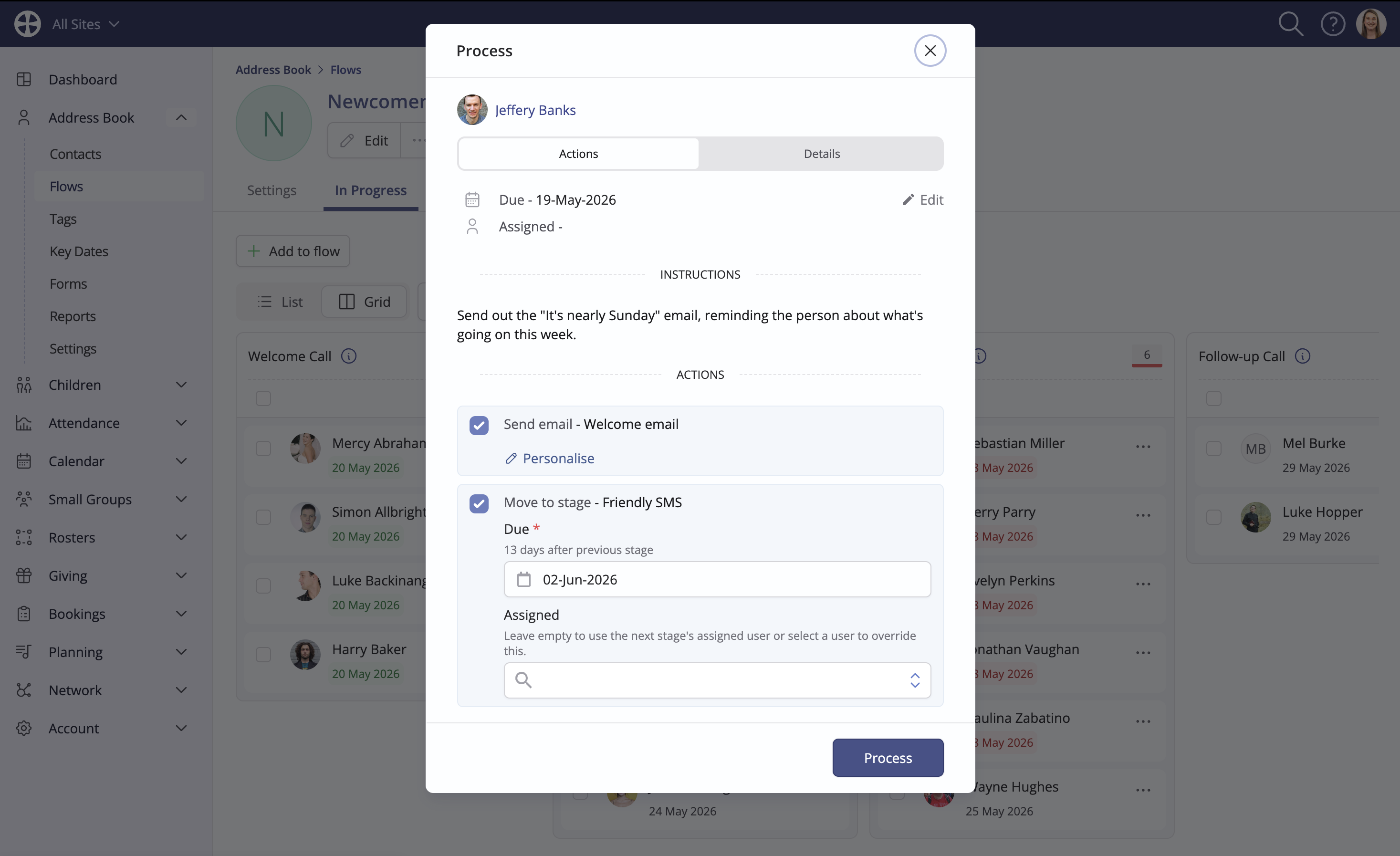
Mission refers to the outward focus of church communities, seeking to fulfil the Great Commission in Matthew 28 to 'Go and make disciples'. In practical terms, that might look like having a robust newcomer integration process or perhaps running outreach-focussed events. Flows are a great way to map out processes and track where people are in their journey of joining your church, helping you to turn first-time visitors into fully integrated members, ensuring nobody falls through the cracks. You might also enable some stages to be automated where no human involvement is needed and have Flow Managers notified when human action is required. Flows also help standardise processes with instructions and pre-set actions, meaning each person receives a similar experience while also allowing for flexibility for each person's journey.
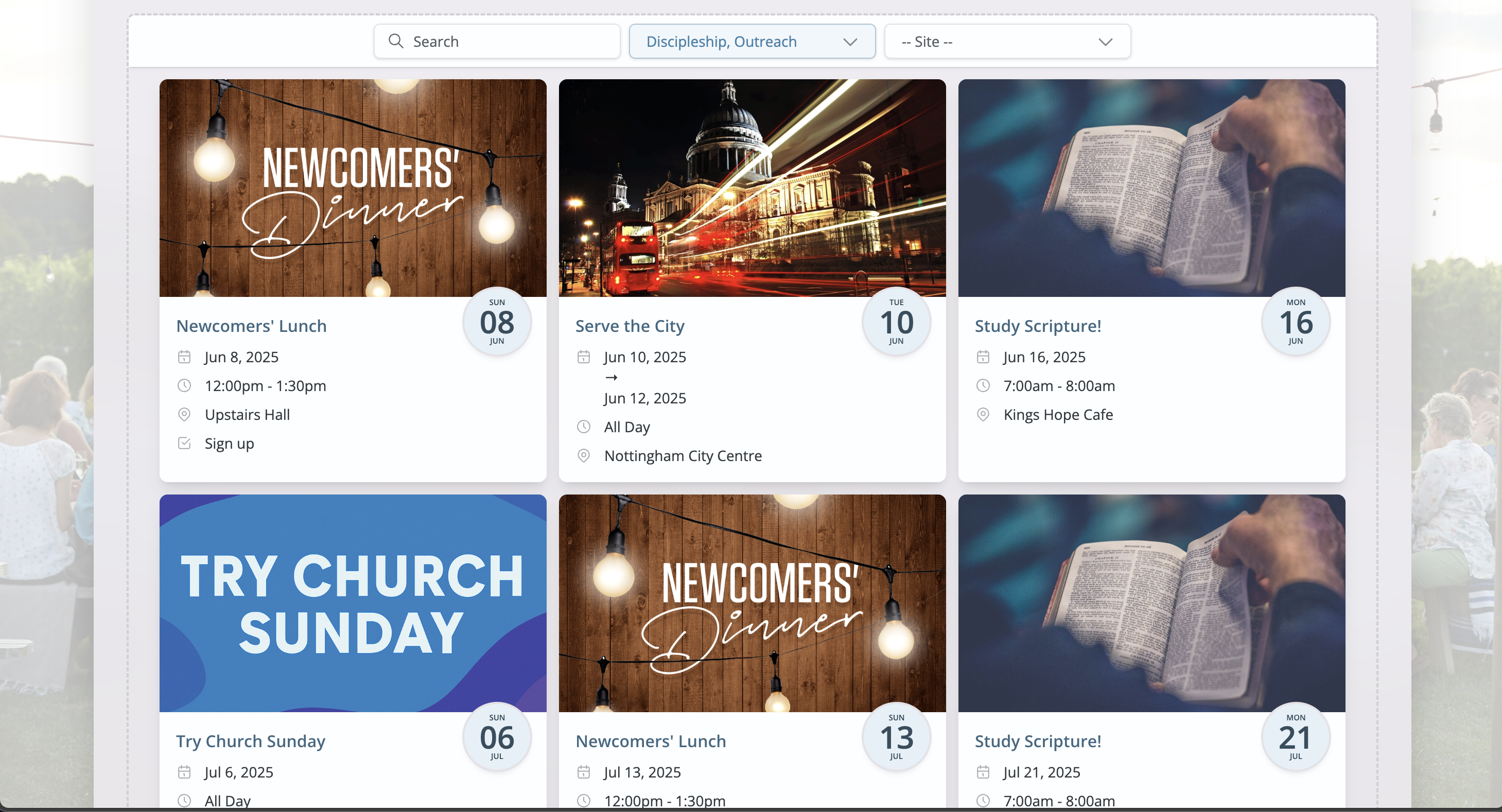
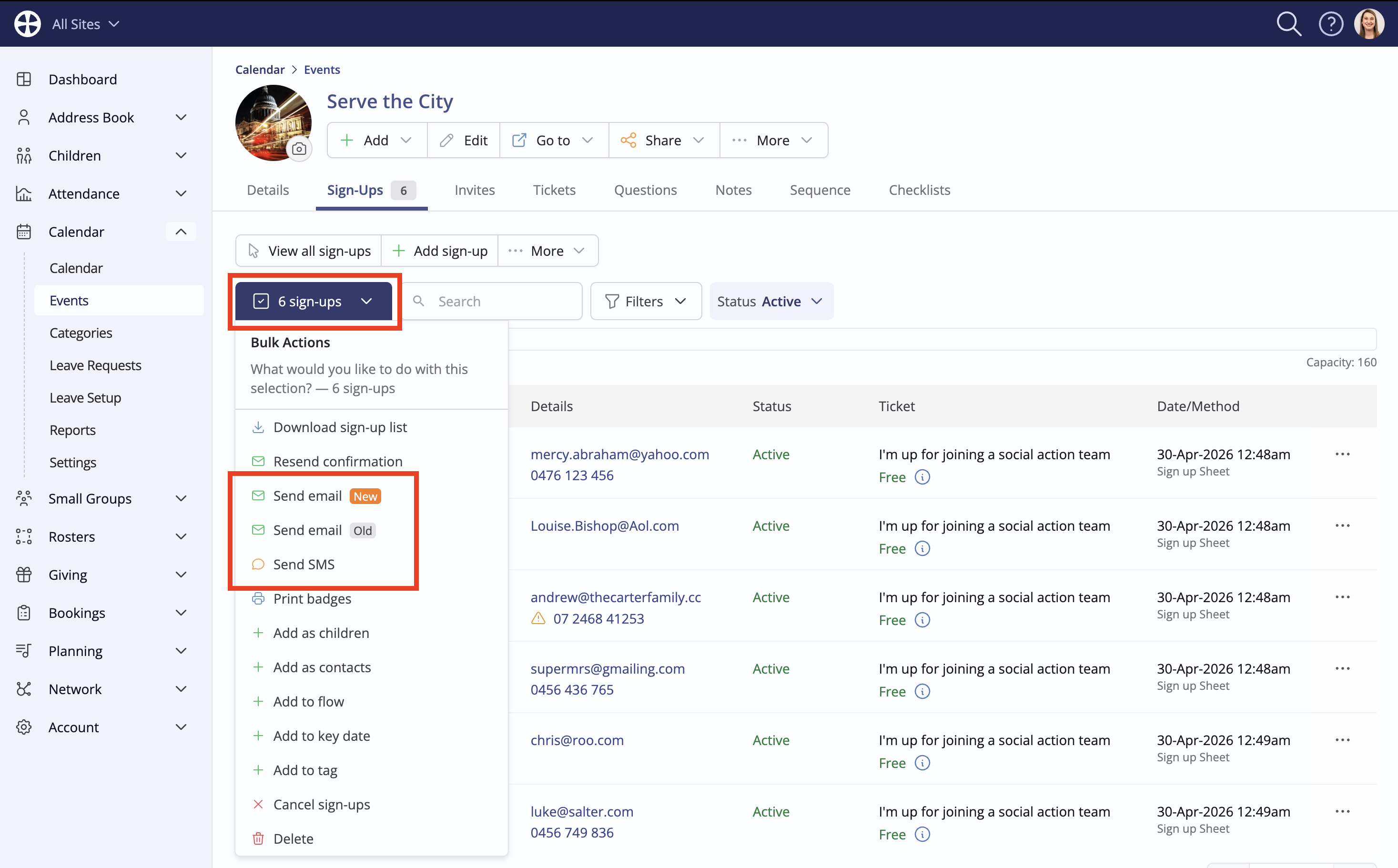
The Calendar module enables you to efficiently run events that can be embedded into your website, making them accessible to those not already in your ChurchSuite account - indeed, there's no requirement for someone to be in your ChurchSuite account before signing up - ideal for newcomers and for outreach-focused events. You can collect signup data, then follow up using the bulk actions communication tools within your event, inviting them back to other events or to join your church and begin a process of finding out about Jesus.