Getting started with the Calendar module
Introduction to the Calendar module
Welcome to the Calendar module. This module enables you to manage all your events in one place, from large events for your members and supporters to smaller, internal events such as a staff meeting. A separate Bookings module manages the allocation of rooms and other resources for the events you run (and for external bookings).
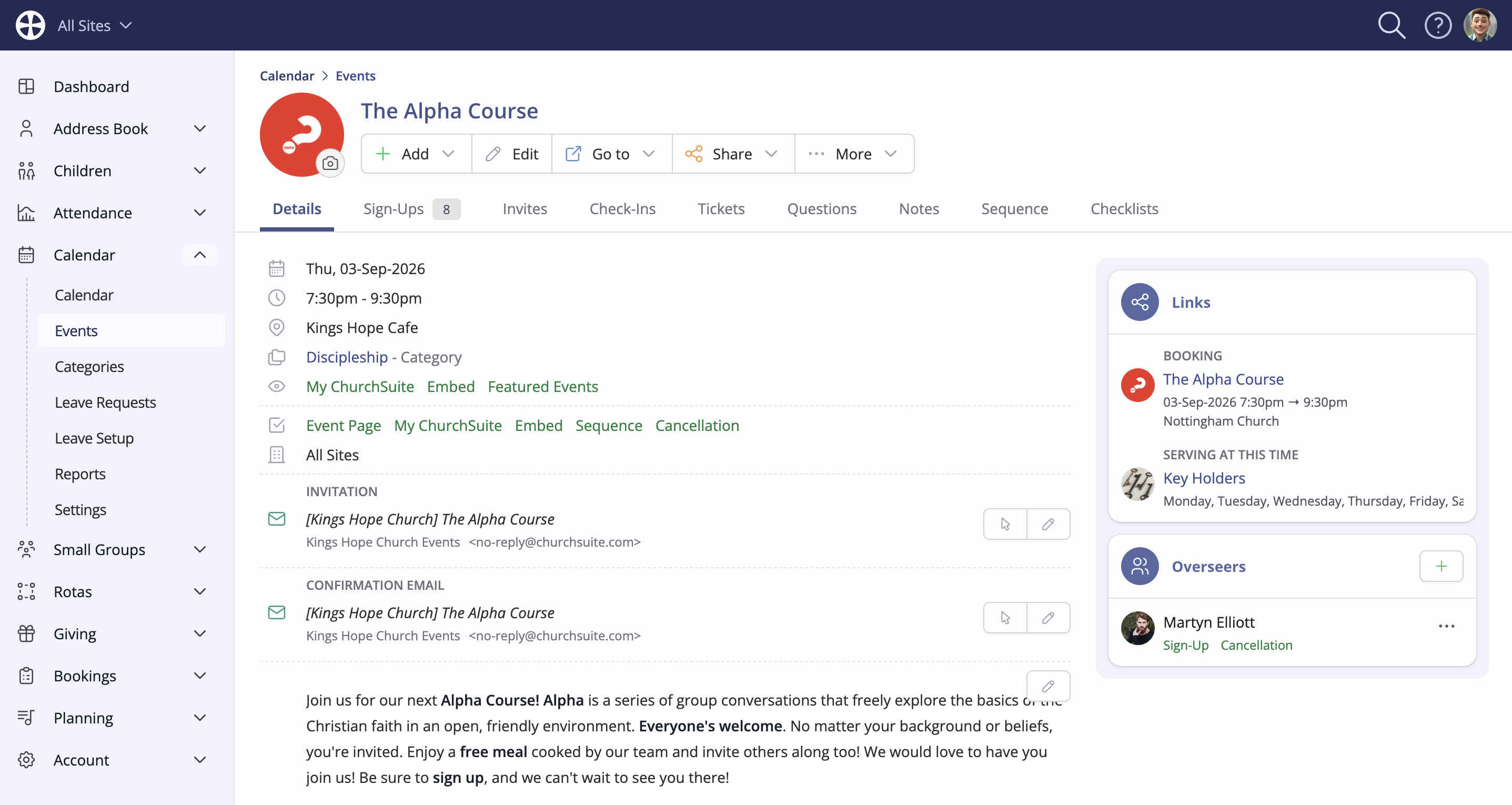
The Calendar module also includes leave management functionality. Knowing when key team members are on leave is vital to event management, so we've made it easy to manage user leave requests. For example, if your internal HR processes require an accept/decline response to leave requests, we've included a 'leave approval' feature.
We encourage you to read this article in full to familiarise yourself with the module's key features and customisation options, as well as some of the basic concepts and terminology you'll encounter in it and in our related support articles and training videos.
Calendar module features at a glance
- Add and import standalone and repeat-sequence events
- Organise and filter events using categories and labels
- Set physical event locations or run online events through the meeting URL
- Control event visibility and sign-up settings on an event-by-event basis
- Manage event status, set pending events as confirmed or cancel an event with a button click
- Embed your calendar or event feeds into your website
- Increase engagement by enabling sign-up for events
- Manage event planning to-dos with checklists to ensure everything required happens before and after the event
- Create tickets - free, pay online, pay on arrival and hidden tickets
- Manage event and ticket capacity
- Add custom questions to the sign-up form to collect all the important information needed to manage the event
- Send event invitations and track responses
- Record event attendance using the check-in functionality
- Allow sign-ups to self-cancel, with an optional reason, should they be unable to attend
- Communicate with those who have been invited, signed up or checked in
- Integrates intuitively with other modules, connecting events to resource bookings and service plans
- Get your ChurchSuite calendar linked to your calendar application by subscribing to an iCal or Google Calendar feed
- Manage user leave requests with accept/decline approval and optionally auto-add unavailability to the Rotas module
Next Steps
Check out some of our short training videos...
- Managing event categories
- How to add an event
- How to add dates to an event sequence
- When and how to add tickets to an event
- How to send event invitations
- How to share an event page URL in an email
- How to record event attendance
- How to embed event lists and calendars into your website
- How to add a User's leave setup
Terminology
Here's a list of key terms you'll encounter in the Calendar module and the related support articles and training videos for this module:
- Events: In the context of this module, events are essentially about 'what is happening, when and where?' so that those viewing your event calendar—perhaps on your website—know what's going on in your church's life. Events might be public or member-facing or private for just a certain audience.
- Categories are the primary way to organise and filter events - every event has a single category. Categories can have their own branding, checklists and Stripe account for paid events. They also offer calendar feeds (iCal, Google Calendar and Outlook) that users can subscribe to.
- Labels work alongside Categories, giving you an additional way to organise and filter events - an event can have multiple labels.
- A Leave Setup defines each user's leave entitlement, working days and line manager approval settings for a leave period/year. Users can then submit leave requests for Holiday, Sickness and a range of other leave types.
- Sequence Events are those that repeat - either following a repeating pattern or a list of ad hoc dates. A sequence always has an end date, but you can easily extend sequences and add/remove dates from a sequence. Events within a sequence are linked together, making updates easier if something changes. For events with sign-up enabled, you can set whether sign-up is for an event or the sequence.
- Sign-ups are those who have signed up for your event.
- Check-ins are those who have been marked as attending your event.
Got a question?
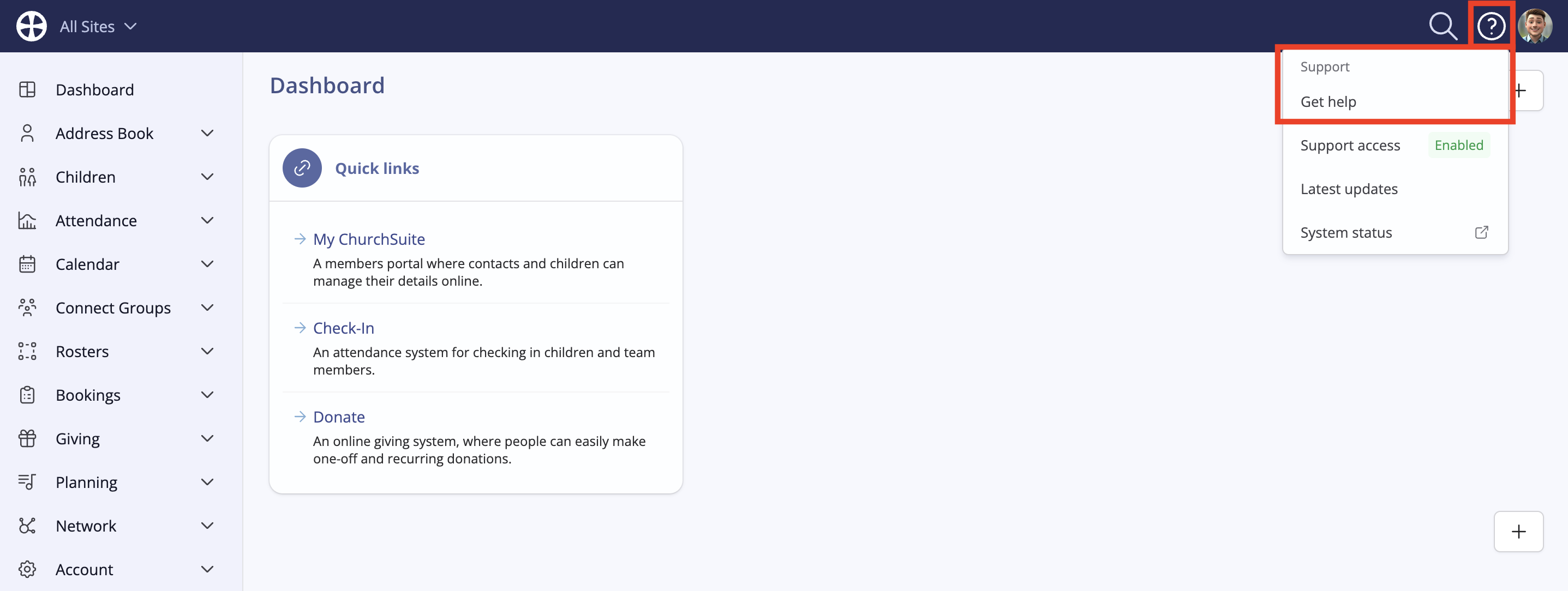
You’ll find the answers to most questions in our support articles - they're all available through the Support menu located in the top-right corner of each page in ChurchSuite. Select Get help and search by topic, phrase or keyword. You can also access the Support Article Library on our website. And if you still can't find something you're looking for, click to get in touch with one of the ChurchSuite team - we’re happy to help!